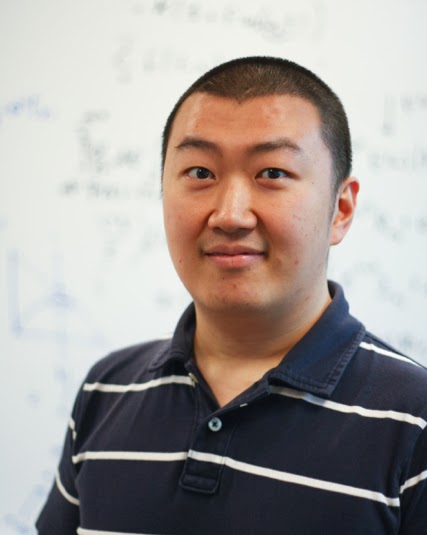
Li-kun Shi (施李坤)
Center for Quantum Matter — School of Physics — Zhejiang University
Email: likun.shi [at] zju.edu.cn
Email: likun.shi [at] gmail.com
(Photo from 2018; entropy has since increased)
Center for Quantum Matter — School of Physics — Zhejiang University
Email: likun.shi [at] zju.edu.cn
Email: likun.shi [at] gmail.com
(Photo from 2018; entropy has since increased)
My research explores the hidden order in systems that are constantly in motion — open, non-equilibrium quantum systems. Unlike the idealized world of textbooks, real quantum systems are never perfectly isolated: electrons interact with atomic vibrations (phonons), photons, and the surrounding environment, continuously exchanging energy and momentum. These interactions shape the behavior we can measure, from electrical currents to light emission, in ways that often defy intuition.
I am particularly interested in measurable effects that reveal the subtle fingerprints of quantum mechanics. Instead of merely classifying abstract phases of matter, I focus on what experiments can actually detect — the twists and turns of electrons under external drives, the nonlinear responses of materials under strong fields, and the quantum signatures hidden in transport, optics, or quantum oscillations.
A central theme in this line of work is the role of quantum geometry. Electrons carry internal "twist" and "shape" in their wave functions, encoding information about how they move and interact. This geometric structure manifests in surprising and observable ways: it can deflect currents like a quantum compass, generate photocurrents in unconventional directions, create beam shifts of electrons or photons, or leave imprints in nonlinear transport. By uncovering and harnessing these geometric effects, we aim not only to understand fundamental physics but also to guide the design of next-generation quantum devices where the environment and geometry are as important as the material itself.
Not every interesting problem begins as a grand research plan; sometimes it begins as a puzzling plot, an unexpected phase shift, a colleague’s question, or two experiments that seem to disagree. I like these problems because they often contain a small crack in our usual intuition — and through that crack one can sometimes see new physics.
A theorist’s job is not only to build elegant frameworks, but also to act as a kind of translator between experiments and concepts. When experimentalists see something strange, theory can help decide whether it is noise, an artifact, a known effect in disguise, or a real clue. Some of my favorite projects started this way: not from asking “What is fashionable?”, but from asking “Why does this measurement look strange?”
For example, in our work on quantum oscillations, the experiment showed a non-trivial geometric phase shift in a band that looked topologically trivial. The puzzle was subtle: the phase did not come from the usual geometry or topology story, but from the constraints of electron filling between two types of bands. In that case, theory helped explain why a seemingly ordinary band could still leave an anomalous geometric fingerprint in quantum oscillation data.
A similar spirit appears in our work on dissipation-shaped nonlinear transport. There, the puzzle was not one strange curve, but a broader tension: different experiments on related quantum materials reported different nonlinear responses while trying to extract something “intrinsic.” The resolution was to take the device environment seriously. Even if a response is independent of the strength of dissipation, it may still depend on the mechanism of dissipation — on how electrons actually relax and form a steady state.
So the "side dishes" are not side quests in the trivial sense. They are flexible, exploratory problems where theory is used as a diagnostic tool: to test ideas, resolve contradictions, and uncover hidden structures behind measurements. Many of them still connect back to my main themes — quantum geometry, non-equilibrium dynamics, and measurable responses — but they begin with the most basic scientific instinct: something looks strange, so let us understand it.
Also see Google Scholar or arXiv list.
When we apply an electric field to a material and measure the current, it is tempting to think that the current simply reveals the material's own intrinsic properties. This idea works beautifully in many linear-response phenomena. But nonlinear transport is more subtle: the electric field keeps doing work on the electrons, pushing them away from equilibrium. To reach a steady state, the system must continuously exchange energy, momentum, or particles with its environment.
This paper asks a simple but important question: in nonlinear quantum transport, is the measured "intrinsic" response really a property of the isolated material alone? Our answer is no. The response is shaped by how the electrons dissipate. A metallic backgate, phonons, disorder, radiation, or other environmental channels may all relax the system in different ways, and these different routes can lead to different non-equilibrium steady states.
To make this statement precise, we studied an exactly solvable theoretical model: Bloch electrons driven by an electric field and coupled to an ideal fermionic bath, in an "Einstein fashion" which is "as simple as possible but not simpler." In this setting, the dissipation-independent nonlinear response separates into two parts. One part is geometric and comes from the quantum structure of electron wave functions, including the quantum metric. The other part is kinetic and comes from the way the bath reshapes the electron occupation. This kinetic part would be missed if one simply wrote down a phenomenological relaxation time by hand.
The key message is that "independent of the dissipation strength" does not mean "independent of the dissipation mechanism." Even when a nonlinear response does not scale with the size of the relaxation rate, it can still depend on the physical process that creates the steady state. Therefore, there is no single universal intrinsic nonlinear-response formula that applies to every device environment.
This viewpoint is useful for interpreting experiments on quantum materials such as PT-symmetric antiferromagnets, including even-layered $\mathrm{MnBi_{2}Te_{4}}$. Different devices may show different nonlinear signals not only because their band structures differ, but also because their substrates, encapsulation layers, gates, phonons, and disorder landscapes provide different dissipation channels.
More broadly, this work suggests that designing quantum devices is not only about designing energy bands and wave functions. In driven, open, real materials, we also need to design the environment: how electrons lose energy, exchange particles, and form a non-equilibrium steady state.
Here is the PRL Issue Cover highlighting our work:

When a beam reflects from a surface, ray optics says it should bounce back from the point of incidence. But waves are more subtle. The reflected beam can be displaced sideways: along the plane of incidence, known as the Goos-Hänchen shift, or perpendicular to it, known as the Imbert-Fedorov shift. These shifts are tiny real-space traces of something invisible — phases carried by the wave.
This paper asks a simple geometric question: can these beam shifts be understood in the same language as Berry phases and quantum geometry? The answer is yes. We showed that GH/IF shifts can be written as a shift vector, directly analogous to the shift vector that appears in nonlinear shift current physics. In this view, a reflected beam does not merely acquire a boundary-dependent reflection phase; it also remembers the internal geometry of the wave functions from which the beam is built.
The central idea that I like most is that the shift vector can be re-expressed as the gradient of the phase of a closed loop in state space. A reflection process first looks like an open scattering path: an incident state goes to a reflected state through a boundary condition. But by completing this path into a Wilson loop, the beam shift becomes a gauge-invariant geometric quantity. This makes the answer clean: the measurable displacement of the beam is controlled by a geometric phase accumulated around a loop.
Even better, this loop can be decomposed into two gauge-invariant pieces. One piece is intrinsic: it depends only on the bulk wave functions and can be expressed through Berry phase / Berry curvature. The other piece is extrinsic: it depends on how the wave scatters from the boundary, and therefore on the detailed reflection process. This separation gives a sharp answer to a long-standing question: which part of a beam shift belongs to the material itself, and which part belongs to the interface?
This viewpoint also gives useful symmetry lessons. If both inversion and time-reversal symmetries force the Berry curvature to vanish, the intrinsic contribution disappears. In contrast, the extrinsic part is controlled by the boundary and scattering geometry; under continuous rotational symmetry, and in some mirror-symmetric cases, the extrinsic transverse shift can vanish. In such situations, the remaining transverse beam shift becomes a direct real-space probe of Berry curvature.
For me, this work is a bridge. Technically, it helped lay the foundation for my later work on the geometric photon-drag effect and nonlinear shift current in centrosymmetric crystals. Conceptually, it connects beam shifts, side jumps, and nonlinear shift currents under the same shift-vector language. The same lesson kept reappearing: phases of wave functions are not just for electrons, but also for other types of excitations. When organized correctly, they become measurable displacements, polarizations, and transport responses.
A personal note: this paper is very close to my heart. I conceived the key ideas during a holiday visit back to China, while I was working with Justin in Singapore from 2016 to 2020. Throughout those years, I often traveled back and forth: returning home to China, spending precious days with my daughter (born in 2017), and then heading back to Singapore. Those quiet moments with her somehow gave me the spark to see the problem differently. The result is a piece of work that, to me, still carries both a scientific idea and a memory of that time.
Postdoc in Inti Sodemann's group, MPIPKS Dresden & Institut für Theoretische Physik, Universität Leipzig (2020.10-2025.05)
Postdoc in Justin Song's group, IHPC A*STAR & NTU (2016.09-2020.07)
Postdoc in Prof. Chang-Pu Sun's group, Beijing Computational Science Research Center (2014.07-2016.07)
Ph.D. supervised by Prof. Kai Chang, Institute of Semiconductors, Chinese Academy of Sciences (2008.09-2014.07)
B.Sc. Beijing Normal University (2004.09-2008.07)